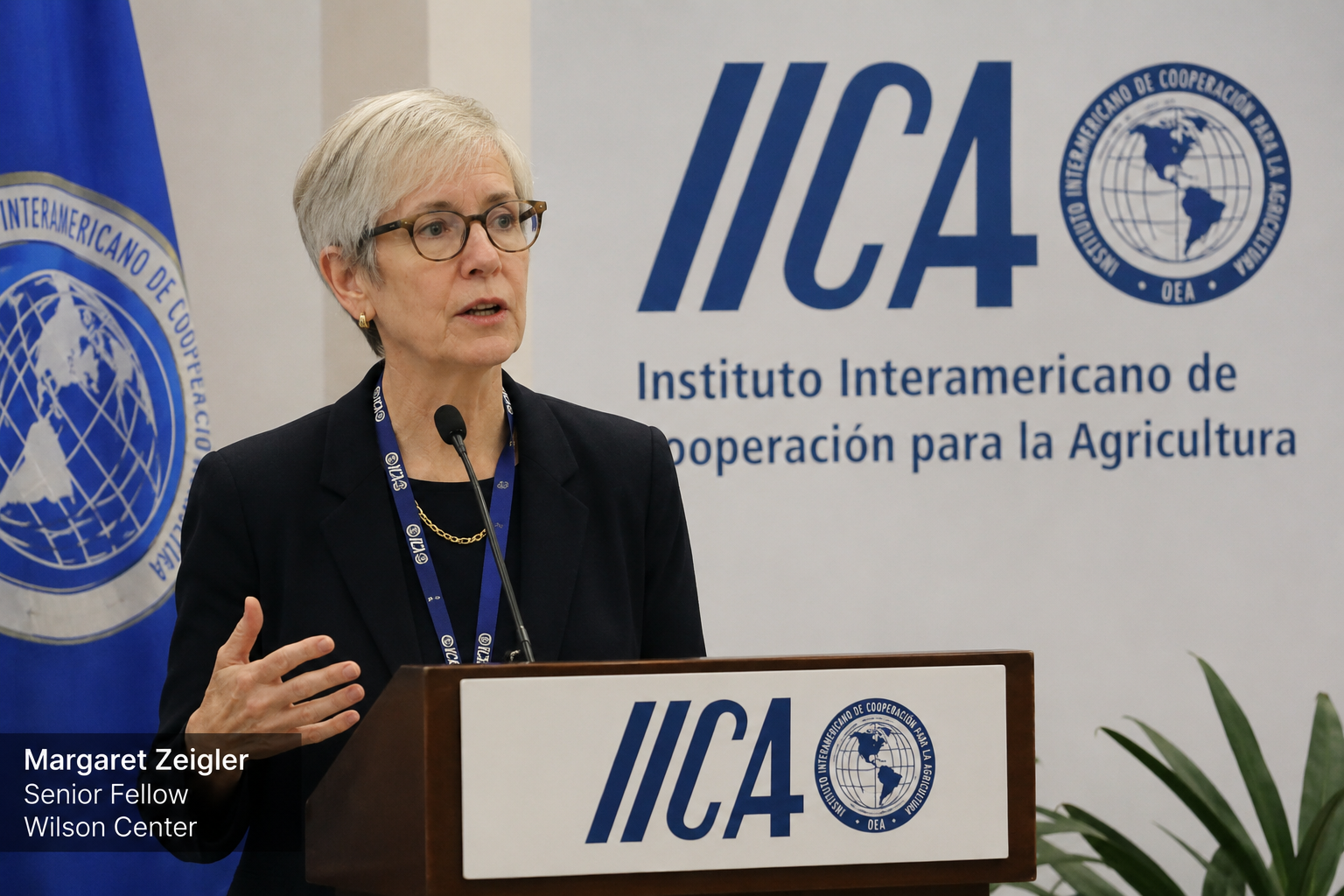
Margaret Zeigler at IICA: Leading the Charge for Sustainable Agriculture in the Americas
When people search for Margaret Zeigler at IICA, they’re usually trying to understand one thing: how a career built on food security policy translated into a leadership role at one of the hemisphere’s most influential agricultural institutions. Margaret Zeigler serves as the United States Representative for the Inter-American Institute for Cooperation on Agriculture, known widely by its acronym IICA. Her path to this position wasn’t accidental — it was the product of decades spent working at the intersection of hunger policy, sustainable development, and international diplomacy.
This article breaks down who Margaret Zeigler is, what her role at IICA actually involves, and why her work matters far beyond Washington policy circles. Whether you’re a student of agricultural policy, a professional in the food security space, or simply curious about the people shaping hemispheric agriculture, this guide gives you the full picture.
Who Is Margaret Zeigler? A Career Rooted in Food Security
Margaret Zeigler holds a PhD in Geography and International Development from the University of Cincinnati, and her academic grounding shaped a career that spans nonprofit leadership, congressional advocacy, and international coalition-building. Before her appointment, she served as interim president of the Supporters of Agricultural Research (SoAR) Foundation, and earlier led the Global Harvest Initiative, a private-sector collaboration focused on boosting agricultural productivity sustainably.
Her earlier work also included time with the Congressional Hunger Center, where she deepened her understanding of policy levers that affect farmers and food-insecure populations. That blend of grassroots hunger work and high-level institutional strategy is precisely what made her a strong fit when IICA began looking for someone to represent US interests within its broader mission.
Margaret Zeigler at IICA: What the Role Actually Involves
Margaret Zeigler at IICA functions as the connective tissue between the United States and the 34 member countries that make up the institute’s hemispheric network. As US Representative, she works to align American agricultural priorities — trade, technology, climate resilience — with IICA’s broader goals across Latin America and the Caribbean.
This isn’t a ceremonial title. The role requires representing IICA’s interests before US government agencies, coordinating with organizations like USDA and USAID, and building partnerships with the private sector. It also means showing up at major international convenings, from agricultural summits in Washington to climate negotiations abroad, to make sure agriculture stays central to the conversation.
Why IICA Appointed Margaret Zeigler as US Representative
Margaret Zeigler was named the United States representative for the Inter-American Institute for Cooperation on Agriculture, bringing roughly 25 years of experience in public policy and institutional leadership to the position. That level of experience wasn’t a nice-to-have — IICA needed someone capable of navigating both technical agricultural policy and the diplomatic nuance required to represent 34 member states simultaneously. Agri-Pulse
Her appointment was met with enthusiasm across the agricultural policy world. Former colleagues and industry leaders publicly praised the decision, with one describing her as a gifted strategic thinker who brings all partners to the table and isn’t afraid to roll up her sleeves to influence policy debates. That reputation for collaborative problem-solving is a big part of why the fit made sense.
Key Initiatives Championed by Margaret Zeigler at IICA
One of the clearest examples of Margaret Zeigler at IICA in action is her work in Guatemala through the VACS initiative — Vision for Adapted Crops and Soils. This program brings together IICA, Catholic Relief Services, FAO, CIMMYT, IFPRI-HarvestPlus, the US Department of State, and USAID to strengthen food security and nutrition outcomes in a country where poverty rates remain stubbornly high.
She has also been deeply involved in banana sector sustainability, an issue that rarely makes headlines but affects smallholder farmers across more than 130 countries. By connecting trade policy conversations to on-the-ground realities for growers, Zeigler has helped keep lesser-discussed commodity chains on the institutional radar rather than letting them fall through the cracks of bigger geopolitical priorities.
Margaret Zeigler’s Role in Global Food Security Diplomacy
Food security diplomacy requires showing up where decisions get made, and Margaret Zeigler at IICA has become a consistent presence at exactly those venues. She has represented IICA at back-to-back UN Climate Change Conferences, participating in COP28 sessions on biotechnology and climate resilience alongside partners like the Biotechnology Innovation Organization, CropLife International, and the US Chamber of Commerce.
At COP29 in Baku, she joined agricultural ministers and food systems leaders at the IICA Sustainable Agriculture of the Americas Pavilion, discussing how climate change is reshaping farming across the region. Discussions at these breakfast sessions focused on the impact of the climate crisis on regional farmers, the potential of diversified cropping systems, and the status of broader climate negotiations. This kind of sustained presence at global forums is what elevates a national representative role into genuine international influence. Food Tank
IICA’s Broader Mission and How Zeigler’s Work Fits In
IICA exists to strengthen agricultural cooperation across the Americas, and its track record speaks for itself. Thanks to IICA’s work, the 34 countries of the Americas presented a joint position on food and agriculture for the UN Food Systems Summit, making it the only region to present such a unified framework. The institute also supports member states in detecting and controlling livestock diseases like African Swine Fever, protecting both farmer livelihoods and regional trade. LinkedIn
Margaret Zeigler at IICA plays a specific part in this larger machine: making sure US policymakers, agribusiness leaders, and research institutions understand why hemispheric cooperation benefits everyone, not just the countries directly receiving support. Her partnerships with organizations like Bayer Crop Science on smallholder farming initiatives show how she translates institutional mission into tangible, funded programs.

Margaret Zeigler at Wilson Center and Cross-Institutional Dialogues
Beyond IICA’s internal programming, Zeigler has represented the institute in high-profile cross-institutional dialogues. At a Wilson Center event featuring Embrapa’s president and Brazil’s ambassador to the United States, she spoke directly to the strategic value of cooperation between research institutions and international bodies. She noted that areas of cooperation between the Wilson Center and IICA include understanding the dynamics between food insecurity, climate change, and other root causes of insecurity across the hemisphere, along with mobilizing more partnerships to address them. Wilson Center
That event also marked the launch of a joint Latin America Sustainable Agriculture Initiative, aimed at improving food security while reducing environmental harms like deforestation and methane emissions. It’s a good example of how Margaret Zeigler at IICA isn’t just administering existing programs — she’s actively shaping new ones.
A Quick Look: Margaret Zeigler’s Career Timeline at a Glance
| Period | Role or Milestone | Focus Area |
|---|---|---|
| 1989–1994 | PhD studies, University of Cincinnati | Geography and International Development |
| Early career | Congressional Hunger Center | US hunger policy advocacy |
| Mid-career | Global Harvest Initiative | Agricultural productivity, private-sector collaboration |
| Prior to 2022 | Interim President, SoAR Foundation | Agricultural research advocacy |
| 2022–present | US Representative, IICA | Hemispheric agricultural cooperation |
| 2023 | COP28 participation | Biotechnology and climate resilience |
| 2024 | COP29 participation | Climate diplomacy, food systems |
| 2024 | Wilson Center dialogue | Cross-institutional food security partnerships |
This timeline shows a career built incrementally, with each role adding a layer of expertise that eventually made her a natural choice to represent IICA’s interests in Washington.
Common Misconceptions About the IICA Representative Role
A common misunderstanding is that a “US Representative” role at an international agricultural body is largely symbolic — attending events, shaking hands, issuing statements. In reality, the position demands technical fluency in trade policy, climate science, and cross-border program management, alongside the diplomatic skill to keep 34 member countries aligned on shared priorities.
Another misconception is that IICA’s work is only relevant to Latin American and Caribbean farmers. In practice, Margaret Zeigler at IICA regularly demonstrates how US agribusiness, research institutions, and policymakers benefit directly from hemispheric cooperation — whether through disease control coordination, trade facilitation, or shared climate adaptation strategies that ultimately protect American food supply chains too.
What’s Next for Margaret Zeigler and IICA’s Agricultural Agenda
As climate volatility continues reshaping agricultural production across the Americas, the demand for coordinated, cross-border responses will only grow. Margaret Zeigler at IICA is positioned at the center of that response, connecting US policy priorities with regional realities on the ground in Guatemala, Brazil, Uruguay, and beyond.
Expect her continued involvement in major climate and agricultural forums, deeper private-sector partnerships modeled after the Bayer collaboration, and further work on adapted crops and soils programming. As one industry colleague put it when reflecting on her appointment, “
Christiane Benner: Inside the Rise of IG Metall’s First Female Chair
Conclusion
Margaret Zeigler at IICA represents far more than a title on an organizational chart. Her career reflects a genuine, sustained commitment to food security, sustainable agriculture, and cross-border cooperation — values that align closely with IICA’s own mission across the Americas. From congressional hunger policy to global climate summits, she has consistently shown up where agricultural decisions get made and pushed for outcomes that benefit both American interests and the broader hemisphere.
For anyone tracking the future of agricultural diplomacy, hemispheric food security, or sustainable farming policy, Margaret Zeigler at IICA is a name worth watching closely in the years ahead.
Frequently Asked Questions
Who is Margaret Zeigler at IICA?
Margaret Zeigler is the United States Representative for the Inter-American Institute for Cooperation on Agriculture, a role she took on after decades of work in food security policy, congressional advocacy, and agricultural research leadership.
What does the US Representative role at IICA involve?
The role involves representing IICA’s interests before US government agencies, building partnerships with private-sector organizations, and coordinating hemispheric agricultural programs that touch trade, climate resilience, and food security.
What organizations did Margaret Zeigler work with before joining IICA?
Before her appointment, Margaret Zeigler at IICA had previously led the Global Harvest Initiative, served as interim president of the SoAR Foundation, and worked with the Congressional Hunger Center on US hunger policy issues.
Why is Margaret Zeigler’s work at IICA important for climate policy?
Her participation in events like COP28 and COP29 shows how agricultural voices are being integrated into global climate negotiations, helping ensure farming communities aren’t left out of climate resilience strategies.
Does Margaret Zeigler’s IICA role only benefit Latin American countries?
No. While IICA’s core mission focuses on hemispheric cooperation, Margaret Zeigler at IICA also works to demonstrate direct benefits for US agribusiness, research institutions, and food security priorities through shared trade and disease-control initiatives.