
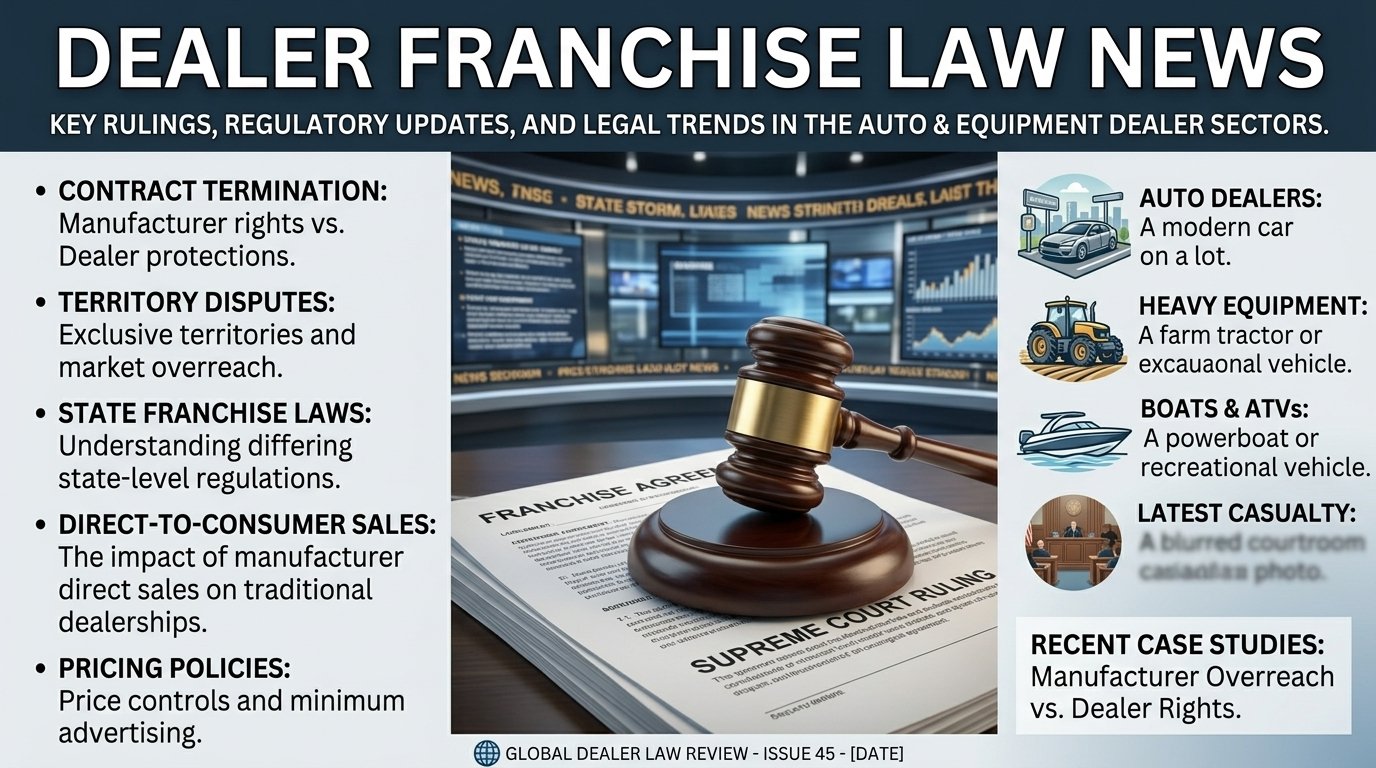
Dealer Franchise Law News: Key Legal Developments Shaping the Automotive Industry in 2025 and 2026
The automotive industry is undergoing one of the most significant transformations in its history, and dealer franchise laws are at the center of many ongoing debates. As electric vehicle manufacturers, traditional automakers, dealership groups, and lawmakers continue to clash over sales models and consumer rights, dealer franchise law news has become an increasingly important topic across the United States. From direct-to-consumer sales battles to state-level legislative reforms, the legal landscape surrounding automobile dealerships is changing rapidly.
For decades, dealer franchise laws have governed the relationship between vehicle manufacturers and independent dealerships. These laws were originally designed to protect local dealers from unfair treatment by large automakers. However, the rise of electric vehicle startups and digital retailing has raised new questions about whether existing laws still meet the needs of today’s automotive market.
Quick Bio Table
| Topic | Details |
|---|---|
| Article Subject | Dealer Franchise Law News |
| Industry | Automotive |
| Main Focus | Franchise Laws and Auto Sales Regulations |
| Key Regions | United States |
| Trending Years | 2025 and 2026 |
| Major Topics | EV Sales, Direct Sales, Dealer Rights |
| Stakeholders | Dealers, Automakers, Consumers, Regulators |
| Industry Impact | High |
| Future Outlook | Continued Legal and Legislative Changes |
Understanding Dealer Franchise Laws
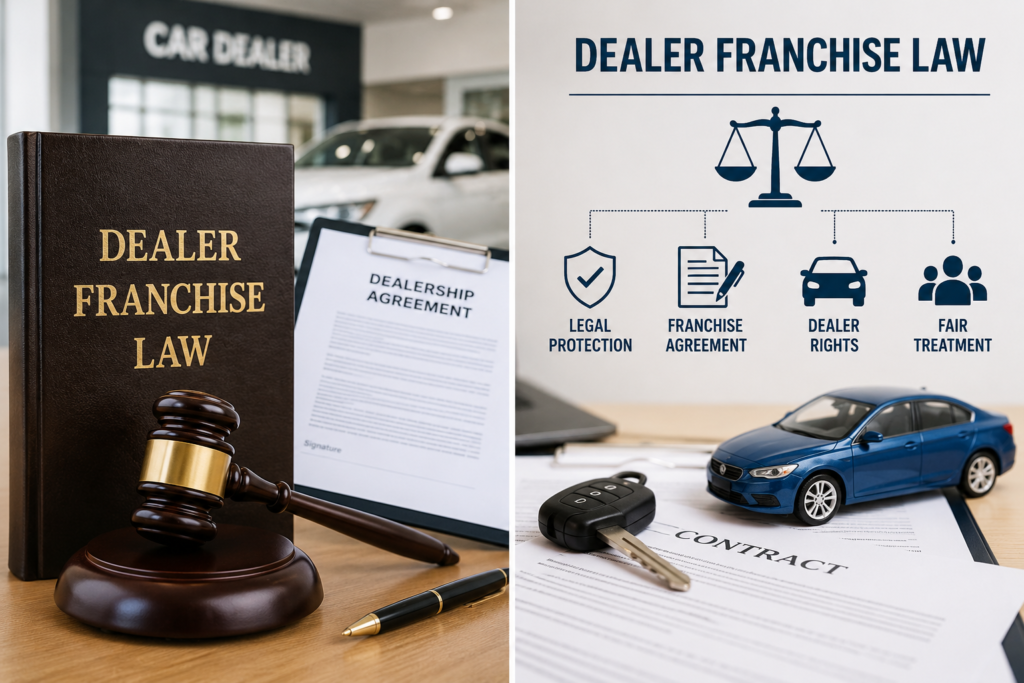
Dealer franchise laws are state regulations that govern the relationship between automobile manufacturers and independent dealerships. These laws generally prevent manufacturers from competing directly with their franchise dealers and establish protections regarding franchise agreements, dealership termination, warranty reimbursements, and market territories.
The purpose of these laws is to create a balanced relationship between large manufacturers and local dealerships. Supporters argue that franchise laws encourage competition among dealers, protect local businesses, and provide consumers with reliable service and support.
Critics, however, believe some franchise laws are outdated and can limit innovation, particularly as consumers increasingly prefer online purchasing options and direct sales models.
Why Dealer Franchise Law News Is Trending
Dealer franchise law news today is attracting significant attention because the automotive industry is changing rapidly. Electric vehicle manufacturers such as Tesla, Rivian, Lucid, and Scout Motors have challenged traditional dealership systems by attempting to sell vehicles directly to consumers.
These efforts have sparked legal disputes in multiple states, leading to lawsuits, legislative debates, and regulatory reviews. As a result, franchise laws that once received little public attention have become a major topic in automotive business news.
The growing popularity of online vehicle shopping has also increased pressure on lawmakers to modernize regulations that were originally written decades ago.
The Rise of Direct-to-Consumer Vehicle Sales
One of the most important developments in auto dealer franchise law news involves direct-to-consumer sales models. Traditionally, manufacturers relied on independently owned dealerships to sell vehicles. However, newer EV companies often prefer selling directly through company-owned stores and websites.
Supporters of direct sales argue that consumers benefit from transparent pricing, streamlined purchasing processes, and greater convenience. They also claim direct sales allow manufacturers to maintain greater control over customer experiences.
Dealer associations, on the other hand, argue that local dealerships provide essential services including maintenance, repairs, financing assistance, and consumer advocacy. They contend that eliminating dealerships could reduce competition and harm consumers in the long run.
State Dealer Franchise Law News in 2025
Throughout 2025, numerous state legislatures reviewed existing franchise regulations. Several states introduced bills aimed at expanding or restricting direct vehicle sales.
Some lawmakers supported exemptions for electric vehicle startups that never established traditional dealership networks. Others pushed for stronger protections for existing franchise dealers, arguing that long-standing businesses should not be disadvantaged by changing regulations.
State-level debates became especially important because franchise laws are primarily governed by individual states rather than federal authorities. This has created a patchwork of regulations across the country, making compliance increasingly complex for automakers.
Washington’s Landmark EV Sales Decision
One of the most discussed developments in dealer franchise law news 2025 involved Washington State. Lawmakers approved measures allowing additional electric vehicle manufacturers to sell directly to consumers under specific circumstances.
The decision was viewed as a significant victory for EV companies seeking broader market access. At the same time, dealer groups expressed concerns that such exemptions could weaken the traditional franchise system.
Industry experts believe Washington’s approach may influence legislative discussions in other states over the coming years.
Scout Motors and Ongoing Franchise Disputes
Scout Motors has become one of the most closely watched companies in dealer franchise law news 2026. The company plans to sell electric vehicles directly to consumers, a strategy that has generated opposition from dealership organizations.
Several dealer groups argue that Scout’s business model violates franchise protections that exist in many states. Legal challenges have emerged regarding whether manufacturers can bypass dealership networks while remaining compliant with state laws.
The outcome of these disputes could establish important legal precedents for future automotive startups.
Carvana’s Expansion into Franchise Retailing
Another major story in auto dealer franchise law news is Carvana’s growing presence in the traditional dealership market. Known primarily for online used-car sales, the company has expanded into franchised new-vehicle operations.
This move highlights the evolving nature of automotive retailing. Rather than completely replacing dealerships, some digital companies are integrating online technology with existing franchise structures.
Industry observers believe this hybrid approach could become increasingly common as consumer buying habits continue to evolve.
The Consumer Perspective
Consumers are central to the ongoing debate surrounding franchise laws. Supporters of dealership systems argue that local dealers create competitive pricing by competing against one another within a market.
Dealerships also provide convenient service centers, warranty support, trade-in options, and financing assistance. Many consumers appreciate having a local business available to address issues after a vehicle purchase.
Advocates of direct sales counter that eliminating intermediary costs can lower vehicle prices and simplify transactions. They also point to growing consumer demand for online purchasing experiences similar to those available in other retail industries.
The challenge for policymakers is finding a balance that protects consumers while encouraging innovation.
Economic Impact on Local Communities
Franchised dealerships contribute significantly to local economies. They generate employment opportunities, pay taxes, support charitable organizations, and invest in community development projects.
Many dealer associations argue that weakening franchise protections could negatively affect local businesses and reduce economic activity in certain regions.
At the same time, supporters of direct sales emphasize that new business models can create different types of jobs and encourage investment in emerging technologies.
As policymakers evaluate future reforms, economic considerations remain a key factor in legislative discussions.
Legal Challenges Expected in 2026
Dealer franchise law news 2026 is expected to focus heavily on litigation and regulatory decisions. Several legal cases involving direct sales models are likely to continue moving through courts and administrative agencies.
Key issues expected to dominate discussions include:
- Direct sales rights for EV manufacturers
- Dealer protections against manufacturer competition
- Digital retailing regulations
- Market area restrictions
- Franchise termination disputes
- Consumer pricing transparency
- Warranty reimbursement requirements
- Online vehicle sales compliance
Because these issues affect billions of dollars in automotive sales, stakeholders are closely monitoring legal developments nationwide.
The Future of Dealer Franchise Laws
The future of dealer franchise laws will likely involve a combination of modernization and preservation. While traditional dealership networks continue to play an important role in vehicle sales and service, technological innovation is forcing lawmakers to reconsider existing regulations.
Many experts predict that future legislation will create specialized frameworks for electric vehicle manufacturers while maintaining core protections for established dealers. Others believe broader reforms may eventually emerge as consumer preferences continue shifting toward digital purchasing channels.
Regardless of the specific outcome, dealer franchise laws will remain a critical issue for automakers, dealerships, consumers, and policymakers throughout the remainder of the decade.
Should You Tuck In Polo Shirts? Style Guide
Final Thoughts
Dealer franchise law news continues to shape the future of automotive retailing in the United States. The ongoing debates surrounding direct sales, electric vehicles, digital commerce, and dealer protections reflect broader changes occurring throughout the automotive industry. As states introduce new legislation and courts address emerging legal disputes, stakeholders must adapt to an evolving regulatory environment. Readers interested in tracking the latest developments in automotive regulations and industry trends can continue following updates through celebritiestrend, where important business and legal topics are regularly discussed.