

Donald Rucker, MD, 1upHealth Chief Strategy Officer: LinkedIn, HIMSS24, and FHIR Leadership Explained
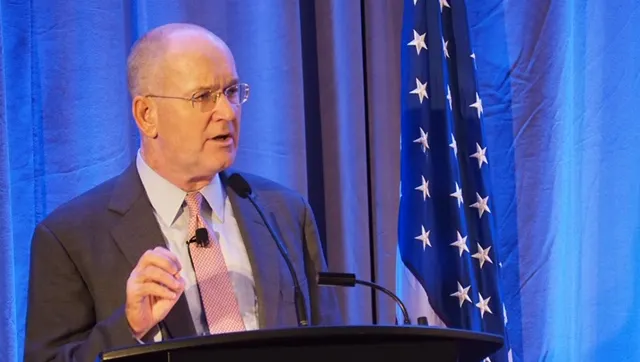
Few names carry as much weight in health IT interoperability circles as Donald Rucker, MD, 1upHealth Chief Strategy Officer, LinkedIn HIMSS24 FHIR advocate, and former federal health IT chief. His career spans clinical medicine, software engineering, federal policymaking, and now startup strategy, making him one of the most quoted voices in modern healthcare data exchange conversations. If you’ve followed HIMSS24 discussions, scrolled through healthcare LinkedIn, or researched the FHIR standard, his name has likely crossed your feed more than once.
This article unpacks who Donald Rucker is, why his move to 1upHealth as Chief Strategy Officer matters, how his LinkedIn presence shapes industry dialogue, what he discussed around HIMSS24, and why his FHIR advocacy continues to influence payers, providers, and health tech developers. Whether you’re a health IT professional, a digital health founder, or simply researching Donald Rucker MD 1upHealth Chief Strategy Officer LinkedIn HIMSS24 FHIR connections, this guide offers a definitive, well-sourced overview.
Who Is Donald Rucker, MD?
Donald Rucker is a board-certified physician, emergency medicine practitioner, and medical informatician with a career built at the intersection of clinical care and computing. He holds a bachelor’s degree from Harvard, an MD from the University of Pennsylvania, and both an MBA and a master’s in medical computer science from Stanford University. Before entering federal service, he practiced emergency medicine across several states and co-developed one of the earliest Windows-based electronic medical records, later earning a HIMSS Nicholas Davies Award for a hospital computing system he helped design.
Rucker’s most prominent public role came as National Coordinator for Health Information Technology at the U.S. Department of Health and Human Services from 2017 to 2021. In that position, he led the drafting of the ONC’s 21st Century Cures Act Interoperability Rule, a regulation that forced electronic health record vendors to adopt standardized FHIR-based APIs. That single body of work is why so many searches for Donald Rucker MD 1upHealth Chief Strategy Officer LinkedIn HIMSS24 FHIR content trace back to federal interoperability policy rather than private industry alone.
From ONC National Coordinator to 1upHealth Chief Strategy Officer
After leaving federal government service, Rucker didn’t step away from interoperability work; he moved deeper into it. In late 2021, he joined 1upHealth, a Boston-based FHIR platform company, as Chief Strategy Officer. The move made headlines across health IT trade publications because it placed the very policymaker who authored the Cures Act interoperability rule inside a company built to help organizations comply with and benefit from that same rule.
As 1upHealth’s Chief Strategy Officer, Rucker helps guide the company’s direction in FHIR-enabled computing, working with payers, providers, and app developers who need to unify clinical and claims data. His dual perspective, having written the regulation and now helping companies operationalize it, gives him rare credibility. This is a core reason the search phrase Donald Rucker MD 1upHealth Chief Strategy Officer LinkedIn HIMSS24 FHIR consistently surfaces across healthcare technology forums and professional networks.

Donald Rucker’s LinkedIn Presence and Thought Leadership
Rucker maintains an active LinkedIn profile where he regularly comments on interoperability policy, TEFCA (Trusted Exchange Framework and Common Agreement), information blocking rules, and the evolving role of FHIR in healthcare data exchange. His posts often dissect proposed federal rules, such as HTI-5, translating dense regulatory language into practical implications for payers and health systems.
What makes his LinkedIn activity distinctive is the blend of policy fluency and technical depth. Rather than posting generic industry commentary, he frequently references specific rule numbers, standards bodies, and implementation mechanics. For professionals tracking Donald Rucker MD 1upHealth Chief Strategy Officer LinkedIn HIMSS24 FHIR discussions, his profile functions almost like a running policy briefing, updated in near real time as new rules and interoperability debates emerge.
HIMSS24 and Rucker’s FHIR Advocacy
HIMSS24, held in Orlando in March 2024, brought together thousands of health IT professionals, vendors, and policymakers. Rucker and 1upHealth were part of the broader conversation, with 1upHealth’s team noting that finalized rules like HTI-1 meant EHR vendors would need to tackle electronic case reporting while providers focused on integrating social determinants of health into daily workflows. That framing, connecting regulatory deadlines to operational reality, is characteristic of how Rucker approaches every HIMSS cycle.
Beyond the show floor commentary, Rucker’s broader HIMSS involvement has included co-presenting sessions on Bulk FHIR data exchange and sharing candid assessments of how the conference itself is evolving amid rising competition from other health tech events. His consistent presence around HIMSS24 and subsequent HIMSS-related podcasts cemented his position as one of the standard’s most visible advocates, reinforcing why the Donald Rucker MD 1upHealth Chief Strategy Officer LinkedIn HIMSS24 FHIR combination remains a frequently researched topic among interoperability watchers.
What Is FHIR and Why It Matters
FHIR, or Fast Healthcare Interoperability Resources, is a data standard that allows different healthcare systems, EHRs, payer platforms, and third-party apps, to exchange information in a consistent, computable format. Before FHIR gained regulatory backing, healthcare data was often locked inside proprietary systems, making it difficult for patients or providers to move information between organizations.
The Cures Act Interoperability Rule, which Rucker helped write, mandated that certified EHR technology support FHIR-based APIs, effectively creating the technical foundation for today’s healthcare app economy. This is why FHIR isn’t just a technical acronym; it’s the regulatory and architectural backbone behind patient access apps, payer data-sharing mandates, and increasingly, AI-driven clinical tools that depend on structured, computable data.
1upHealth’s FHIR Platform and Industry Impact
1upHealth positions itself as a cloud-based FHIR platform that unifies clinical and claims data for payers, providers, and biopharma organizations. The company’s technology helps clients meet compliance deadlines tied to CMS and ONC interoperability rules while also building analytical capabilities on top of standardized data. Its customer portfolio has included major national payers, reflecting the scale at which FHIR adoption now operates.
Rucker’s role in shaping that platform strategy extends beyond internal product direction. He frequently represents 1upHealth in public forums, webinars, and media interviews, explaining how computable clinical data supports value-based care, prior authorization reform, and quality measurement. Industry analysts have described 1upHealth’s FHIR API platform as one of the clearest real-world implementations of ONC’s original interoperability vision, a framing that directly ties back to the rule Rucker himself authored.
Career Snapshot: Key Milestones
The table below summarizes major points in Rucker’s career relevant to understanding his current role and influence.
| Period | Role | Relevance to FHIR/Interoperability |
|---|---|---|
| Pre-2017 | Emergency physician, CMO at Siemens Healthcare and Premise Health | Built clinical and enterprise health IT experience |
| 2017–2021 | National Coordinator for Health IT, ONC/HHS | Authored the Cures Act Interoperability Rule mandating FHIR APIs |
| Nov 2021–Present | Chief Strategy Officer, 1upHealth | Guides FHIR platform strategy for payers, providers, and app developers |
| Ongoing | LinkedIn thought leader | Comments on TEFCA, HTI-5, information blocking, and AI in data sharing |
| HIMSS24 and beyond | Industry speaker and commentator | Connects regulatory deadlines to practical FHIR implementation guidance |
Common Misconceptions About FHIR and Interoperability
A frequent misunderstanding is that FHIR compliance alone guarantees meaningful interoperability. In reality, having a standardized API doesn’t automatically mean data is clean, complete, or genuinely useful for clinical decision-making. Rucker has repeatedly emphasized that organizations need to move beyond minimum compliance to unlock real value from FHIR-enabled data.
Another misconception is that FHIR and TEFCA solve the same problem. FHIR standardizes the format and structure of health data exchange, while TEFCA establishes a legal and technical framework for who can query that data and under what conditions. Rucker’s commentary, especially around privacy risks tied to sensitive care categories, highlights that these are complementary but distinct layers of the interoperability stack.
Practical Takeaways for Healthcare Organizations
For health systems and payers, the practical lesson from Rucker’s career is that regulatory compliance should be treated as a floor, not a ceiling. Organizations that only meet the minimum FHIR API requirements often miss opportunities to improve care coordination, streamline prior authorization, or reduce administrative burden through better data computability.
For app developers and digital health startups, Rucker’s trajectory, from federal regulator to startup strategist, illustrates how deeply policy and product decisions are intertwined in healthcare technology. Understanding the regulatory intent behind FHIR mandates, not just the technical specification, often separates successful interoperability products from ones that merely check a compliance box.
As Rucker put it while discussing trends at a recent HIMSS conference, it’s <cite index=”15-1″>hard to imagine this being anything but standards-based native FHIR in the cloud</cite> when describing the direction of computable healthcare data. That sentiment captures the throughline connecting his federal policy work to his current strategy role at 1upHealth.
Otmar Kury: Hamburg Criminal Defense Attorney & Legal Career Profile
Conclusion
Donald Rucker’s career offers a rare, continuous thread through healthcare interoperability, from writing the federal rule that mandated FHIR APIs to now helping a private company operationalize that same standard at scale. His LinkedIn commentary keeps the industry updated on evolving rules like TEFCA and HTI-5, while his HIMSS24 appearances and ongoing conference participation reinforce his standing as a go-to voice on where healthcare data exchange is headed next.
For anyone researching Donald Rucker MD 1upHealth Chief Strategy Officer LinkedIn HIMSS24 FHIR developments, the throughline is consistency: a physician-turned-policymaker-turned-strategist who has spent decades pushing healthcare toward more usable, standardized, patient-accessible data. As FHIR adoption matures and AI applications increasingly depend on computable clinical data, his perspective is likely to remain influential across both policy and product conversations.
Frequently Asked Questions
Who is Donald Rucker, MD?
Donald Rucker, MD, is a physician and medical informatician best known as the former National Coordinator for Health Information Technology at HHS, where he authored the Cures Act Interoperability Rule. He is now the Chief Strategy Officer at 1upHealth, a FHIR-based health data platform.
What does Donald Rucker do at 1upHealth?
As 1upHealth’s Chief Strategy Officer, Donald Rucker helps guide the company’s FHIR platform strategy, working with payers, providers, and app developers to unify clinical and claims data. His federal policy background informs how the company approaches interoperability compliance and product direction.
What has Donald Rucker discussed on LinkedIn?
On LinkedIn, Donald Rucker regularly addresses topics like TEFCA privacy concerns, information blocking exceptions, proposed rules such as HTI-5, and the broader trajectory of FHIR adoption. His posts are widely followed by health IT policy and interoperability professionals.
Was Donald Rucker involved with HIMSS24?
Yes, Donald Rucker and 1upHealth were part of HIMSS24 discussions, with commentary focused on how finalized rules like HTI-1 would affect EHR vendors and providers. His broader HIMSS involvement has included co-presented sessions and ongoing podcast interviews about FHIR and interoperability trends.
Why is FHIR important to Donald Rucker’s work?
FHIR is the technical standard that Rucker helped mandate through the Cures Act Interoperability Rule, and it remains central to his current role at 1upHealth. It enables standardized, computable data exchange across EHRs, payers, and healthcare applications, which is foundational to modern interoperability.
How can I find Donald Rucker’s LinkedIn profile?
Donald Rucker maintains a public LinkedIn profile under his name, where he lists his role as 1upHealth Chief Strategy Officer and shares ongoing commentary on FHIR, TEFCA, and health IT policy. Searching his name alongside 1upHealth typically surfaces his verified profile.